
Correct sizing is the foundation of effective incontinence protection. A well fitted product seals properly at the legs and waist, keeps the absorbent core where it is needed and reduces the risk of leaks and skin irritation. This guide explains how to take accurate measurements and how to choose a size for our waterproof covers, disposable briefs, cloth diapers, washable protective briefs and support garments.
Unsure which size is right? Whether you are ordering for yourself or someone in your care, our team can help you choose. Contact us before you order and we will guide you to the right fit.
We accept returns within Canada and the USA, with return shipping at your cost. Choosing the correct size the first time saves you time and money.
Key sizing principles
- Aim for the middle of the range. When a size is listed as a range, the most secure and comfortable fit comes from measurements near the middle of it, unless the product page advises otherwise.
- Measure with your protection in place. If a garment will be worn over a brief, diaper or pad, take your measurements while wearing it.
- Test the fit before stocking up. When trying a new brand or style, order a sample, a single bag or one item before buying in quantity. Fit varies between manufacturers, even within the same size.
Reading Our Size Charts
Most of our size charts list the body measurements each size fits best. For products with elastic waistbands, such as washable protective briefs and some waterproof pants, the chart shows the garment itself, from no stretch to full stretch. All measurements are listed in inches and centimetres. If you are unsure what a chart is showing, contact us and we will help.
Sizing by Product
Products sized by waist and hips
Briefs, cloth diapers and waterproof covers are sized around the lower body. Have your waist and hip measurements ready, along with your thigh measurement for covers and rompers.
How to measure
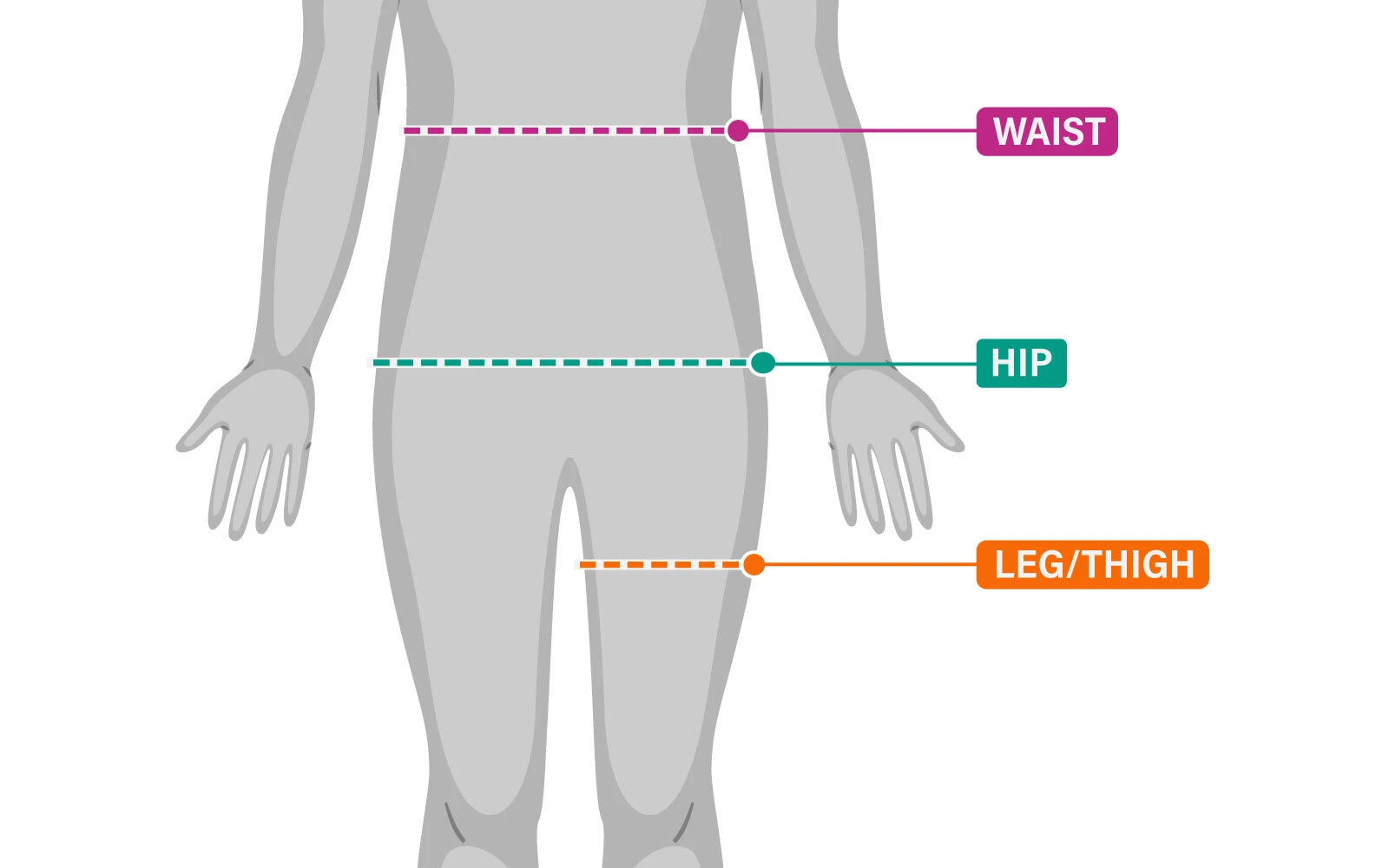
Use a soft fabric measuring tape. If you do not have one, a piece of string or a shoelace works well: mark where the ends meet, then lay it flat against a ruler or rigid tape measure. Caregivers may find it easier to measure while the person is standing with support or lying flat.
Waist
Wrap the tape around the torso, just above the navel. Keep it snug and allow the abdomen to relax naturally.
Hips
With feet together, wrap the tape around the fullest part of the hips and seat. Check in a mirror that the tape stays level all the way around. Measuring for a waterproof cover? Put on your brief or diaper first for the most accurate result.
Thigh
Wrap the tape around the widest part of the thigh. This measurement determines how well the leg openings seal against leaks.
Waterproof Covers, Pants and Rompers
What to measure: waist, hips and thighs. A secure seal at the legs and waist is what keeps a cover from leaking.
- Choose the size where your measurements fall closest to the middle of the range. A cover that is too loose can allow leaks, while one that is too tight can restrict circulation and irritate the skin.
- If your waist and hips fall into different sizes, choose the larger size, or contact us for guidance.
- Rompers: measure to fit the legs first, then confirm the hip and chest measurement on the size chart.
Disposable Briefs and Protective Underwear
What to measure: waist and hips.
- Use the larger measurement. Compare your waist and hips and size by whichever is larger, then choose the size whose range includes that number.
- We list best fit measurements. Manufacturers often publish the absolute minimum and maximum a brief will adjust to while laid flat, which does not account for body shape, weight or height. Our best fit measurements give you a more realistic starting point and a better seal at the legs.
- Need maximum fit figures? You will find maximum fit sizing for every size in our Disposable Reference Guide.
Between two sizes? Choose the size where your measurement is not near the top of the range. A brief worn at its upper limit is more likely to feel tight and gap at the legs. We also recommend trying a sample before committing to a larger order.
Cloth Diapers
What to measure: waist and hips, then use the size chart to find the size they fit into most naturally.
Cloth diapers tend to be more forgiving and true to size, and their fasteners are far more durable than disposable tabs.
- The most comfortable fit comes from measurements that are not close to the top or bottom of a size range.
- Every product fits a little differently, and cloth can shrink with laundering. Order one diaper and wash it a few times to confirm the fit before buying in quantity.
Fit two sizes? Some cloth diapers overlap in sizing. If you fit both, we recommend the larger size for overnight or at home use, where its added coverage and absorbency help, and the smaller size for daytime when discretion matters more.
Washable Protective Briefs
What to measure: waist and hips.
Washable protective briefs should be sized like regular underwear: snug enough to hold the absorbent padding close to the body, without being so tight that it becomes uncomfortable.
The measurements we list show the brief from no stretch to maximum stretch. We recommend choosing a size where you fall in the upper half of the size range.
At the low end of a range? Please consider choosing a smaller size, as the pants may be too loose.
Products sized by chest and length
Fixation bodysuits are sized around the upper body. Have your chest and collarbone to crotch measurements ready.
How to measure
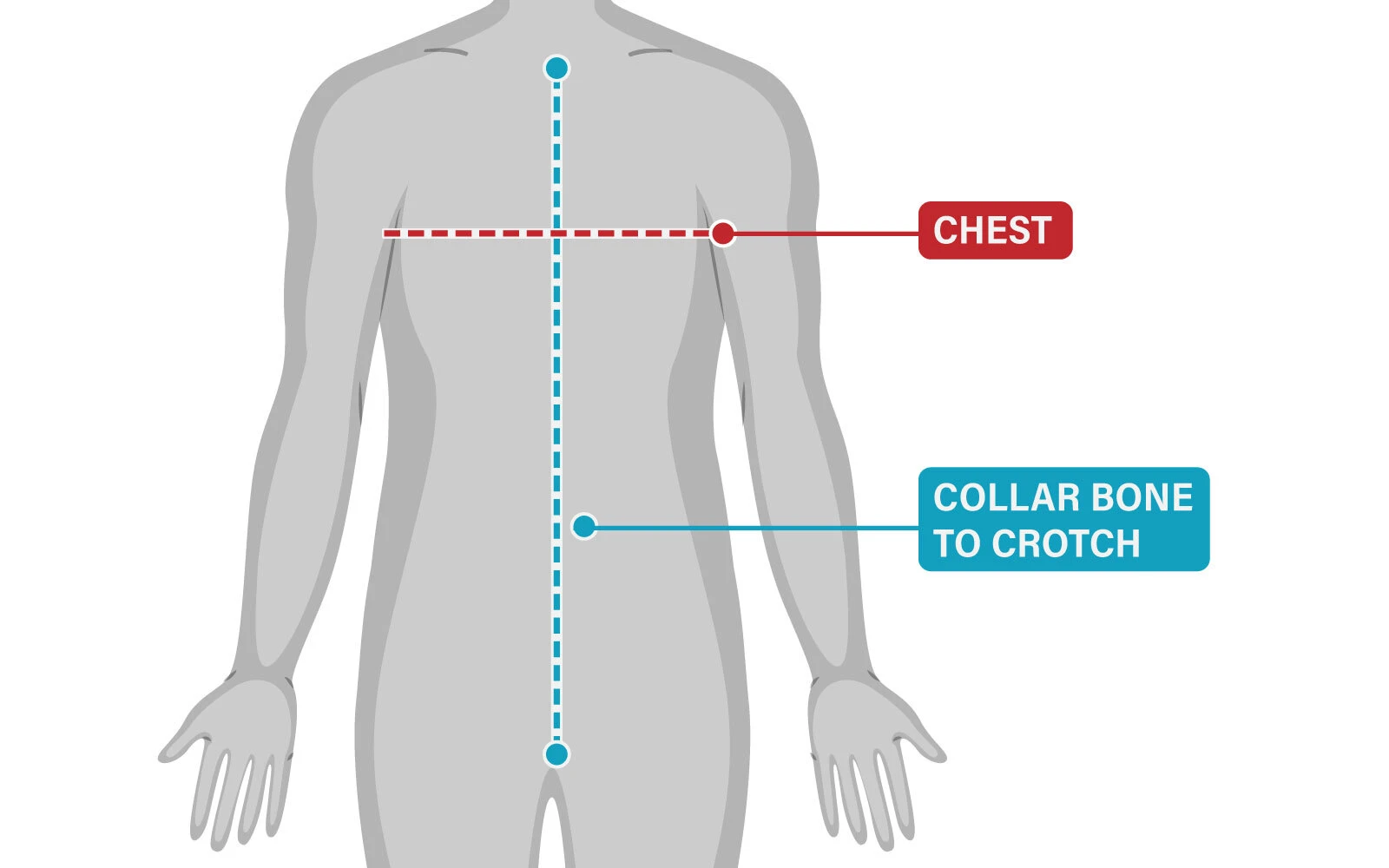
Use a soft fabric measuring tape, or a piece of string marked where the ends meet and laid flat against a ruler.
Chest
Wrap the tape snugly around the fullest part of the chest, across the nipples and under the arms.
Collarbone to crotch
Place the end of the tape at the centre of the collarbone and run it straight down the front of the body to the bottom of the crotch, between the legs. Measure while wearing your usual brief or diaper, since the bodysuit will be worn over it.
Fixation Bodysuits
What to measure: chest and collarbone to crotch length. Chest is the most important, since the garment needs to fit comfortably. For length, measure from the collarbone down to the bottom of the crotch, over your brief or diaper.
Fixation bodysuits hold briefs and pads securely in place, preventing the shifting and sagging that can lead to leaks. A correct fit is what allows them to do that job.
Based on women's T shirt sizing. Our fixation bodysuits are sized like women's T shirts, so most men will get a good fit by sizing up one size. We always recommend checking the measurements to confirm.
Our fixation bodysuits come in two fabrics:
- Stretch cotton bodysuits can stretch a few inches longer than the listed measurements and may shrink up to 10% after washing.
- Organic fixation bodysuits are made of 100% organic cotton with a generous cut. They shrink significantly over the first three washes, so wash and dry them on hot several times to shrink them to fit. They do not have the stretch of our stretch cotton bodysuits.
Between sizes? If one size fits your length better but is slightly snug in the chest, that size will usually work in our stretch cotton bodysuits. Organic bodysuits will not stretch to make up the difference.
Still have questions?
If you need help before ordering, or a product you received does not fit the way the size chart suggests, contact us. Our team tests the products we carry and is glad to help you find dependable protection that fits.
Monday to Friday, 8am to 4pm ET
Contact Us